Negative Space
Energy du Jour | Edition #10

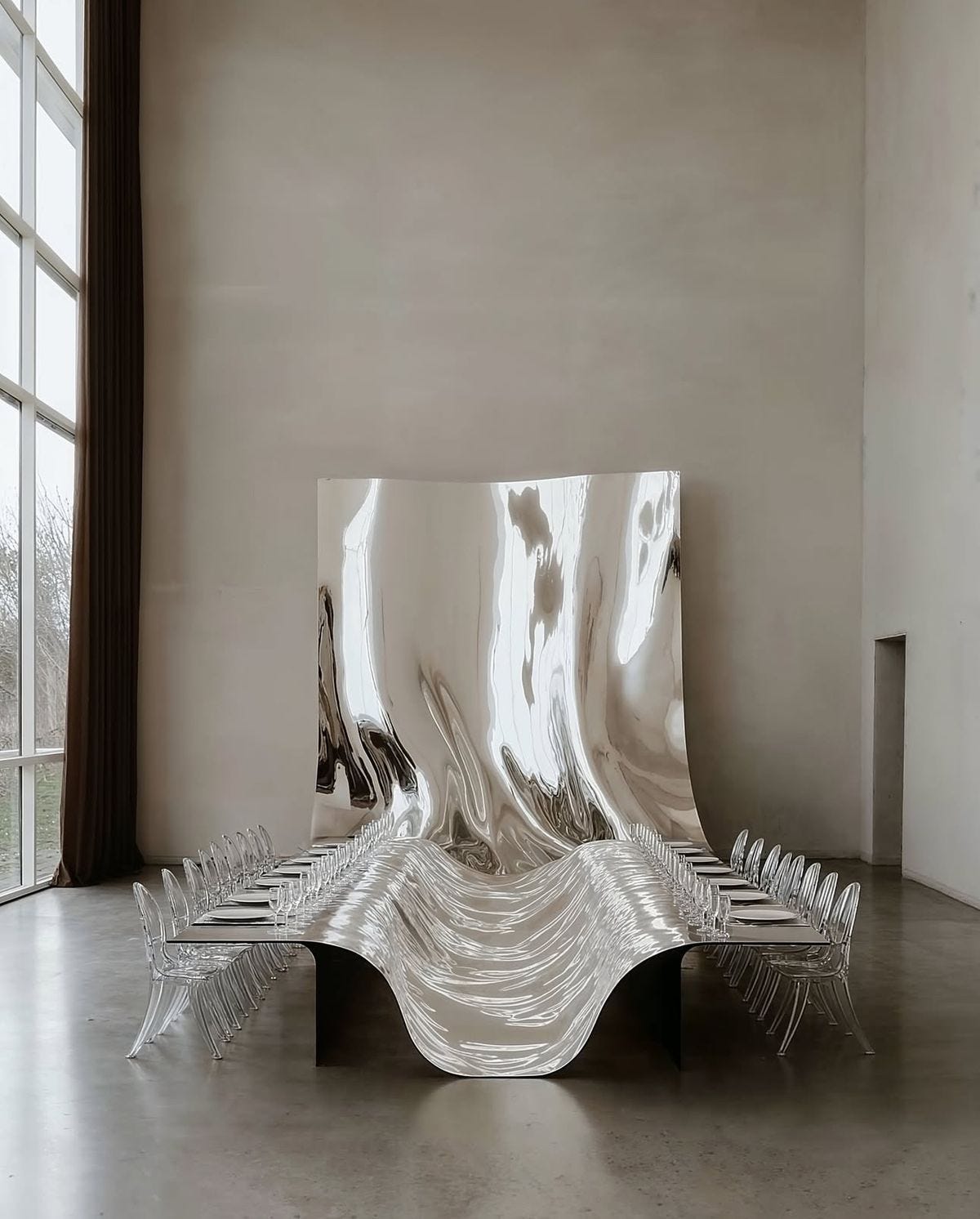
It started as one of those lively Dubai dinners - the kind where plates overlap, laughter fills the air and ideas spill faster than peppercorn sauce. Someone (it might have been me) threw out the question, “so … what does negative space mean to you?”
It was one of those pauses where everyone looks up mid-bite, intrigued and slightly unsure where this is going. The architect went first, gesturing with her fork: “It’s the pause between structures - what gives a building room to breathe.” The fashion designer swirled her glass, nodding. “It’s the skin between stitches. The air that makes the silhouette move.” The marketer laughed and said, “For me, it’s the empty billboard that somehow says more than the one next to it.” The lawyer - yes, that was me - added, “It’s the clause that isn’t written but defines how everything can be interpreted.” The engineer, ever the pragmatist, grinned. “It’s literally what keeps things from collapsing.” The dancer–choreographer smiled knowingly, “In dance, negative space is everything - it’s the pause between movements, the breath that gives shape to rhythm. Without it, motion loses meaning.”
We all burst out laughing. Because when you bring together an eclectic bunch for dinner, you don’t just get conversation - you get a multi-disciplinary TED Talk with dessert. But when the laughter settled, we realised we’d all circled the same truth: negative space isn’t emptiness, it’s what gives everything else meaning.
In art, negative space is the untouched area that defines the subject. In Japanese aesthetics, it’s ma - the sacred pause between sounds, movements or forms. It’s what allows music to be melodic, architecture to be balanced, and words to carry weight. Yet in our daily lives, we treat space as waste. We fill every blank with something -notifications, calls, chatter, noise. We cram our calendars, conversations and even emotions with “doing.” We mistake fullness for purpose. But energy, like great design, needs contrast. Without silence, there is no sound. Without space, there is no form. Without rest, there is no energy.
And science agrees. When we pause, our brain’s Default Mode Network - a system that activates when we’re not focused on external tasks - lights up. This network is responsible for self-reflection, emotional regulation and creative insight. A 2013 study in Frontiers in Human Neuroscience found that the DMN supports perspective-taking and the integration of memories and feelings into a coherent sense of self. In simple words: our best ideas and emotional clarity often arrive when we stop trying to think.
And it doesn’t take long. Research in the Journal of Cognitive Enhancement shows that even ten minutes of intentional rest after mental effort can improve focus and mood regulation. A mere 10 minutes. Imagine what a whole evening of not-doing could do. We think stillness drains momentum, but it actually restores the capacity to move with precision.
That’s where one of my favourite rituals comes in - The Negative Space Practice. It’s deceptively simple. Once a day, pick a pocket of pause - five or ten minutes after lunch, before bed or between meetings. No phone, no music, no agenda. Just let the space exist. Notice the outlines of the moment: the air, the light, your breath. Let your nervous system breathe without interference. If a thought arises, fine. If it doesn’t, even better. When you’re done, jot down one word, image or feeling that surfaced. Over time, you’ll start to see a quiet pattern - an inner rhythm that only reveals itself when you give it room.
This isn’t a productivity hack. It’s reverence for the unseen architecture of your energy. Neuroscientist Mary Helen Immordino-Yang calls it the paradox of rest : even when the brain seems quiet, it’s more metabolically active - weaving emotion and memory into meaning. Rest, then, is not a void - it’s invisible construction. We often chase energy through addition: more structure, more supplements, more self-optimisation. But true energy, the kind that lasts, is born through subtraction. It’s found in what you protect rather than what you fill. When you allow moments of negative space - between tasks, thoughts and interactions - you give your energy the room to return to you.
When was the last time you let a moment stay empty? Not awkwardly, not anxiously, but intentionally? This week, protect one blank space in your day like you’d protect a piece of art in progress. Let it hang there, unfilled. Sit with the pause. Let your mind and body reorganise themselves in the silence.
You might find that energy isn’t something you need to chase after all - it’s been waiting for you in the spaces you keep overlooking.
Until next time.
Your Internet sidekick,
Negin